Summer 2026 Field Team

[We are no longer accepting new applications for Summer 2026. Thanks to everyone who applied. We will read every application personally, and anticipate making decisions and notifications in mid to late February.

Read on for an example of what our field team does and what we look for in future applicants.]

Are you passionate about wildlife conservation and do you excel at living in remote mountain environments? Does your dream job combine these interests?
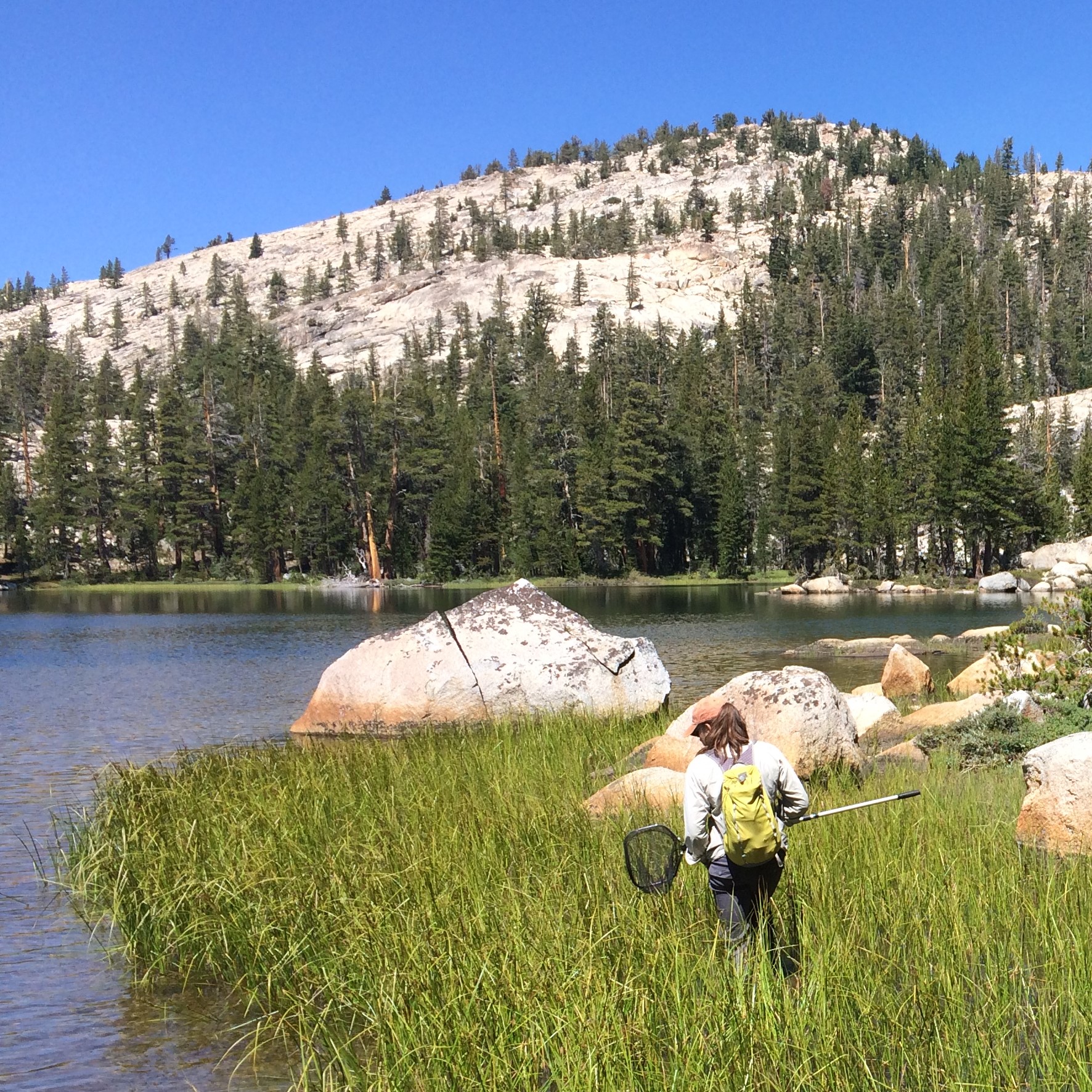
MRLG team member conducting a frog survey at a subalpine lake, Yosemite National Park, CA.
A MLRG team member performs a CMR survey for Rana sierrae frogs.

The Mountain Lakes Research Group, based at the University of California Sierra Nevada Aquatic Research Laboratory (SNARL) in Mammoth Lakes, CA, USA, is seeking applications for up to four seasonal research crew members for the Summer 2026 field season. Successful applicants will work in the Sierra Nevada mountains as part of a team restoring populations of the endangered mountain yellow-legged frogs (Rana muscosa and R. sierrae) in the presence of the amphibian chytrid fungus, a widespread amphibian pathogen.

Read more in the flyer below! Application instructions are in the flyer.

Mountain yellow-legged frog restoration amid a wildlife pandemic.

California’s mountain yellow-legged frogs are endangered. One reason is an ongoing wildlife pandemic (or, a panzootic). Worldwide, amphibians are threatened by a disease called chytridiomycosis, caused by the amphibian chytrid fungus Batrachochytrium dendrobatidis. This disease has caused declines in frog and salamander species across six continents, including here in California. In a public seminar on Thursday 12 November 2020, our own Mountain Lakes Research Group Principal Investigator Tom Smith, PhD described some of the conservation tools that we study. Our goal is to help mountain yellow-legged frog populations persist in a landscape with widespread disease.

The recorded seminar is available to watch:

https://www.youtube.com/channel/UCRKf_rnxbSEvv_dp5lZtPBQ

This seminar was part of the UC Santa Barbara Natural Reserve System seminar series. Our research group is based out of the Sierra Nevada Aquatic Research Laboratory, which is part of the Natural Reserve System.

Researchers and agencies work together to stop Bd epizootics in wild mountain yellow-legged frog populations.

Our work on Bd mitigation and cooperation with California and U.S. wildlife agencies was recently described on U.S. Fish and Wildlife Service’s blog, in a series on conservation in action. Thanks to Meghan Snow for the write-up, and to Jill Seymour, Isaac Chellman, and many others for their collaboration on this project. See the link below:

https://medium.com/conservation-service-in-action/fighting-chytrid-how-do-biologists-fight-pandemics-in-the-animal-kingdom-675a5dc99af2

Frogs released after treatment.
Mountain yellow-legged frogs are released into pens after a round of antifungal treatment to reduce infections with the amphibian chytrid fungus. credit: Roland Knapp.

Frog conservation in Sequoia and Kings Canyon National Parks

Mountain yellow-legged frog populations in Sequoia and Kings Canyon National Parks are in steep decline due to the introduction of non-native trout and the ongoing spread of the amphibian chytrid fungus. As described in this new video, to prevent frog populations from being wiped out when the fungus arrives in a population, early life stage animals (e.g., tadpoles) are being collected from those sites, raised to adulthood in captivity, and reintroduced when they are less susceptible to fungal infection. This collaboration between the National Park Service, San Francisco and Oakland Zoos, and the Mountain Lakes Research Group may portend a brighter future for this imperiled amphibian.